You don’t feel it while you’re sitting. ## That’s the strange part.
You can spend hours at a desk, in a car, on a sofa — and your lower back feels completely fine in the moment.
It’s only when you stand up that it shows itself.
- A tight pull.
- A slight hesitation before you straighten fully.
- A sense that your back needs a second to “warm up” before it behaves normally.
Most people interpret this as a back problem.
But in most cases, it isn’t really about the back.
It’s about what the body has been doing while you weren’t moving at all.
The body doesn’t like being held still for long periods
The human body is built around variation — bending, rotating, walking, shifting weight, adjusting constantly without thinking.
Sitting removes almost all of that.
Not in an aggressive way. Not in a painful way. Just quietly.
And over time, the body adapts to the position it is repeatedly placed in.
Hip flexors shorten slightly.
Glutes “switch off” their active role.
The spine spends long periods in one compressed shape.
Breathing becomes shallower without anyone noticing.
None of this feels dramatic in the moment.
But the system slowly changes its default.
So when you finally stand up, you’re not starting from a neutral place anymore.
You’re starting from a body that has been held in one pattern.
Why the lower back ends up doing more than it should
The lower back is not meant to carry the entire load of standing, walking, or stabilising your body on its own.
It is part of a system.
When hips, glutes, and upper back are doing their job properly, the lower back is supported rather than overworked.
But after long periods of sitting:
- The hips don’t fully extend when you stand
- The glutes don’t immediately activate
- The spine compensates to keep you upright
So the lower back quietly becomes the “manager” of stability.
Not because it is designed for that role — but because it is the only area still responding quickly.
Over time, that creates the feeling people describe as:
- tightness
- stiffness
- compression
- “my back needs to loosen up before I move properly”
Why stretching alone often doesn’t change much
This is where most people go first.
They stretch the lower back.
Sometimes it feels good temporarily. But the pattern returns.
That’s because the tightness is rarely just local.
It is often a coordination issue, not a flexibility issue.
The body isn’t simply “short.”
It’s slightly out of sync.
The hips don’t fully open when they should.
The glutes don’t fully engage when they’re needed.
The spine takes on work it shouldn’t be doing alone.
So stretching the lower back is like loosening a rope that is only one part of a larger system.
Helpful — but incomplete.
What actually starts to change the pattern
The goal isn’t to “fix the back.”
The goal is to redistribute how the body wakes up after sitting.
There are a few practical layers to this.
1. Reintroducing hip extension after sitting
After long periods of sitting, the hips forget they are supposed to fully open.
Simple movement that restores this changes everything over time.
Not intense stretching — just consistent reintroduction of extension through walking, standing hip movement, and controlled activation.
Even a short walk immediately after sitting begins to interrupt the stiffness cycle.
2. Teaching the glutes to “turn back on”
The glutes are not inactive — they are just under-invited.
After sitting, they don’t always respond immediately when you stand.
That delay shifts load into the lower back.
Simple activation patterns before or after long sitting periods can reduce that compensation over time.
Not as a workout.
As a reminder to the system: this muscle is part of standing too.
3. Reducing the “sudden stand-up shock”
One of the most overlooked moments is the transition itself — sitting to standing.
Most people move from zero to upright instantly.
But the body often benefits from a short transition:
- shift weight
- engage hips lightly
- stand in stages instead of one motion
This sounds small, but it reduces the abrupt demand placed on the lower back.
4. Breaking long stillness more often than you think
The real driver is not posture — it’s duration.
Even perfect posture held too long becomes a problem.
The system is designed for movement frequency, not static “correct positions.”
Short interruptions matter more than long corrections.
A few minutes of movement every so often often has more impact than one long corrective session.
Where recovery tools fit into this
This is also where recovery tools can support the system — not replace it.
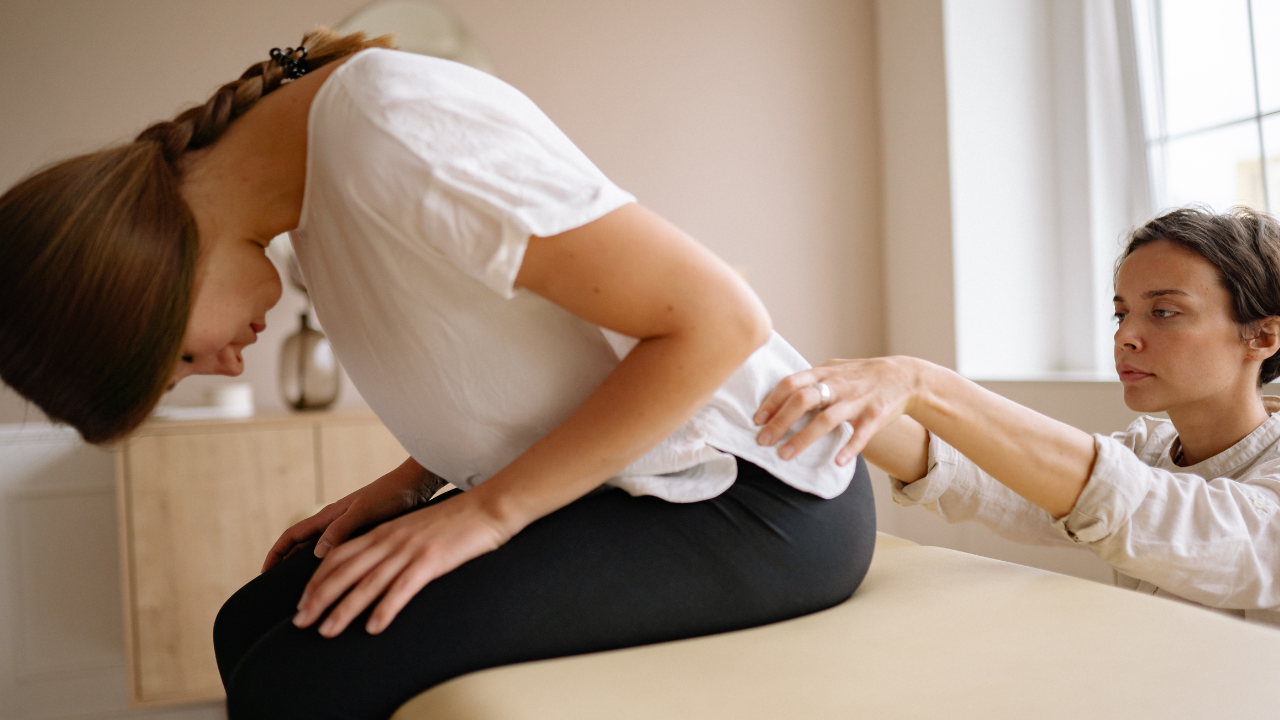
Things like heat, massage, or targeted therapy tools don’t change the pattern on their own.
But they can reduce the “noise” in the system — the sensation of tightness that makes movement feel restricted.
When used alongside movement, they can make it easier for the body to re-enter normal motion patterns.
The longer-term shift most people miss
Over time, the goal isn’t to eliminate stiffness completely.
It’s to change what the body does automatically after sitting.
Because the real difference isn’t whether you sit.
It’s what your body defaults to when you stand up.
A body that transitions smoothly feels:
- less resistance
- less hesitation
- less “reset time” after sitting
- more immediate control of movement
That is what people usually describe as “feeling younger in the body,” even if they don’t frame it that way.
Closing thought
Lower back tightness after sitting is rarely a sign that something is “wrong.”
It’s usually a sign that the system has adapted to stillness a little too well.
The solution is not forcing the back to behave differently.
It’s reminding the whole system how to share the load again — hips, glutes, spine, and movement working together instead of one area compensating alone.
And that shift rarely happens in one stretch.
It happens in how often you interrupt stillness, how you transition between positions, and how consistently you reintroduce movement into the day.